Queer Places:
Smith College (Seven Sisters), 9 Elm St, Northampton, MA 01063
Cornell University (Ivy League), 410 Thurston Ave, Ithaca, NY 14850
Wellesley College (Seven Sisters), 106 Central St, Wellesley, MA 02481
Lakeside Cemetery, 501 North Ave, Wakefield, MA 01880, United States
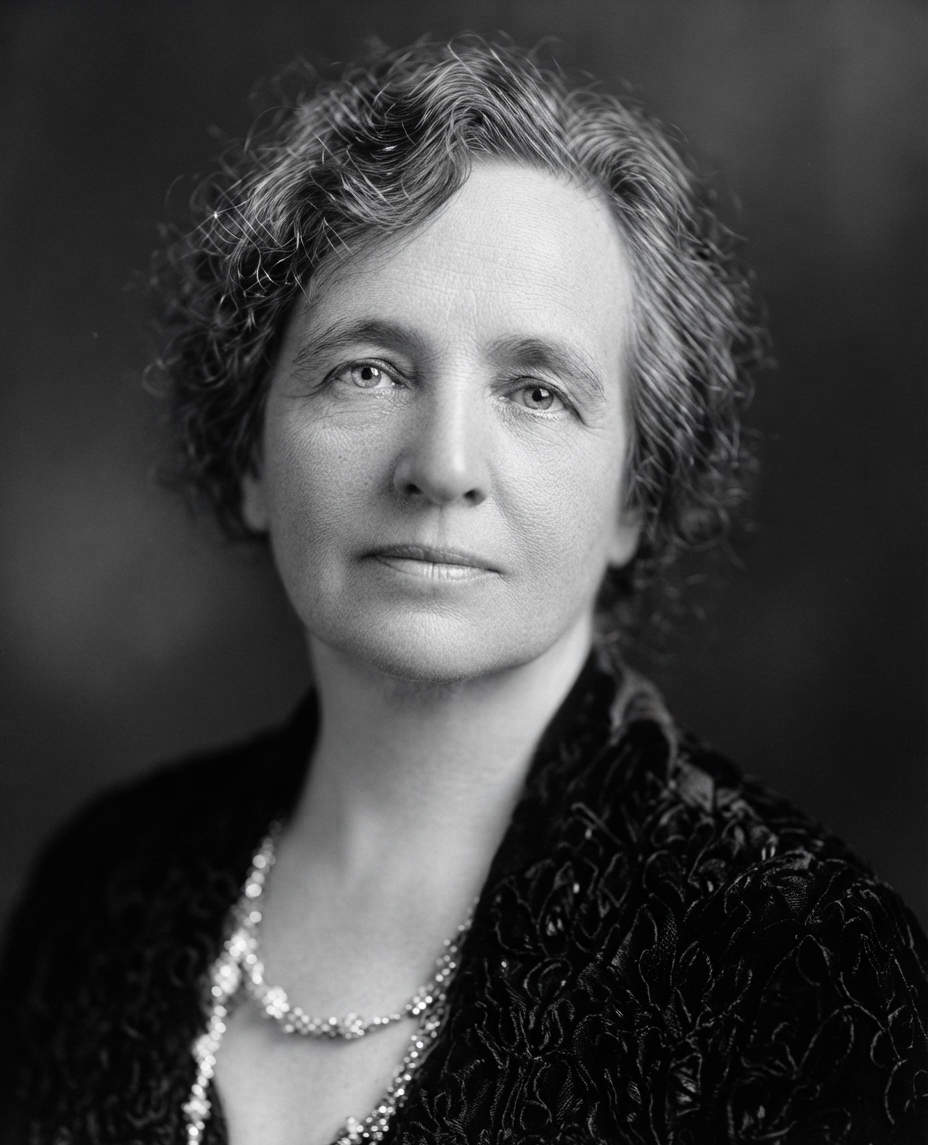 Mary Alice Walton (January 13, 1865 – January 26, 1954) was an American classicist, archaeologist, and Professor Emerita of Latin at Wellesley College,
prominent among the first generation of American women who combined a close knowledge of ancient sites with teaching in a women's college.
Mary Alice Walton (January 13, 1865 – January 26, 1954) was an American classicist, archaeologist, and Professor Emerita of Latin at Wellesley College,
prominent among the first generation of American women who combined a close knowledge of ancient sites with teaching in a women's college.
Born on January 13, 1865, in Lawrence, Massachusetts, she was the daughter of George Augustus Walton (1822–1908), an educator and education official,
and Electa Noble Lincoln Walton (1824–1908), a noted clubwoman and suffragist. She grew up alongside her siblings, George Lincoln Walton (1854–1941) and
Freddie Walton (1859–1860). She graduated from Smith College in 1887 and subsequently earned her Ph.D. in 1892 from Cornell University with a thesis on the
cult of Asclepius, which was later reissued posthumously in 1979 as Asclepios: the Cult of the Greek God of Medicine.
Following her doctoral studies, Walton built an extensive record of field research abroad, serving as a Fellow of the American School of Classical
Studies at Athens from 1892 to 1894, from 1895 to 1896, and returning again from 1910 to 1911. She also served as a Fellow in the American Academy in Rome
during the 1903–04 and 1922–23 academic years. Professionally, she taught archaeology and classics primarily in schools and colleges for women, working in
Worcester, Massachusetts, from 1888 to 1890 before moving to New York to teach at Sachs's School for Girls (later the Dwight School). In 1896, she returned
to Massachusetts to join the faculty at Wellesley College, where she remained for the rest of her career teaching classics, ancient art, Latin, and
archaeology. She was appointed Associate Professor of Latin and Archaeology in 1902, gained a full professorship in Latin in 1915, and served as Chair of
the Latin department from 1916 to 1917 and again in 1929 before retiring with emerita status in 1933. Beyond Wellesley, she was an early member of the
Classical Association of New England (CANE), serving as its president from 1914 to 1915, and was a founder and active member of the Classical Club of
Greater Boston.
During the decade spanning 1900 to 1910, Walton was a central fixture of the Wellesley College faculty, navigating an era characterized by rigorous
academic expansion and tightly knit communities of professional women. In the broader framework of LGBTQ history and women's higher education, faculty
members of this generation lived and worked within a professional and social milieu shaped by "Boston marriages" and intense, affectionate homosocial
networks among educated women. While specific documentation regarding Walton's personal romantic life remains sparse, her career trajectory mirrors that of
pioneering women scholars who established supportive, independent domestic arrangements and collaborative spaces within institutions like Wellesley. These
academic networks functioned as historical precursors to modern queer structures, allowing women to prioritize intellectual pursuits and lifelong bonds
with female colleagues outside traditional patriarchal frameworks. Walton passed away in Boston in 1954 at the age of 89, and is buried at Lakeside
Cemetery in Wakefield, Middlesex County, Massachusetts.
References:
Other references:
- Necrology: "Necrology: Alice Walton," American Journal of Archaeology 58, no. 2 (1954): 154.
- Biographical Database: Rutgers School of Arts and Sciences, Database of Classical Scholars, s.v. "WALTON, Mary Alice" (archived from the original on December 9, 2019).
- Obituary: "Retired Wellesley College Teacher Dies," Transcript-Telegram, January 27, 1954, p. 19.
- Archival and Census Records: 1900 United States Federal Census (via Ancestry); Boston Evening Transcript notices regarding her parents (George Augustus Walton and Electa Noble Lincoln Walton).
- The Cult of Asklepios (Ph.D. dissertation, Cornell University, 1892; reissued posthumously in 1979 as Asclepios: the Cult of the Greek God of Medicine).
- "Some Transformations of Antiquity," The Wellesley Magazine 8 (1900): 159–65.
- "'Calynthus' or Calamis," American Journal of Archaeology 8 (1904): 460–2.
- "The Classics as a Means of Training in English," Bulletin of the Classical Association of New England 1 (1906): 29–31.
- "An Unpublished Amphora and an Eye Cylix signed by Amasis in the Boston Museum," American Journal of Archaeology 11 (1907): 150–9.
- "Painted Marbles from Thessaly," Art and Archaeology 4 (1916): 47–53.
- "The Date of the Arch of Constantine," Memoirs of the American Academy at Rome 4 (1924): 169–180.
- Institutional and Professional Records: Wellesley College yearbooks (The Legenda) and Presidential/Treasurer Reports; Annual Reports of the American School of Classical Studies at Athens; records and historical centennial documentation of the Classical Association of New England (CANE).
Support this project
This website is a passion project researched, developed, and funded entirely by me. If you find the content valuable and would like to help support the ongoing research and hosting costs, any contribution is deeply appreciated.
Thank you for keeping this independent resource alive!
My books on Amazon: Elisa Rolle's books
BACK TO HOME PAGE
